WDR
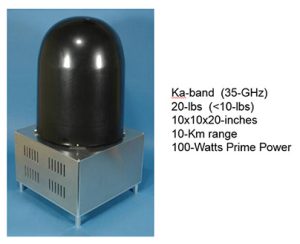
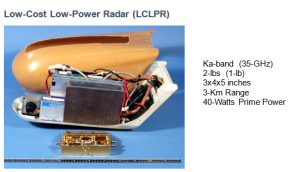
A specialized Ka-band obstacle detection system engineered to identify power lines, cables, and wires at operational range — enabling safe low-altitude UAV flight in wire-dense environments.
A specialized Ka-band obstacle detection system engineered to identify power lines, cables, and wires at operational range — enabling safe low-altitude UAV flight in wire-dense environments.
WDR
A specialized Ka-band obstacle detection system engineered to identify power lines, cables, and wires at operational range — enabling safe low-altitude UAV flight in wire-dense environments.
Key Capabilities
Technical Specifications
WDR
System Overview
The Wire Detection Radar (WDR) addresses one of the most persistent and under-solved safety challenges in low-altitude aviation: the reliable detection of power lines, guy wires, cables, and other suspended obstacles that are nearly invisible to optical sensors and conventional collision-avoidance systems. Operating in the Ka-band, the WDR uses millimeter-wave sensing to identify these threats at operationally meaningful ranges, enabling timely avoidance maneuvers before they become flight safety events.
The Problem
Low-altitude UAV operations — particularly in first responder, utility inspection, infrastructure monitoring, and agricultural applications — routinely occur in environments densely populated with overhead wire infrastructure. A single wire-strike can destroy an aircraft, compromise a critical mission, or injure personnel on the ground. Existing optical-based obstacle avoidance systems perform poorly or fail entirely in low-light, foggy, or high-contrast sun conditions, precisely the operating environments where radar excels.
Radar-Based Wire Detection
Wire detection in the millimeter-wave regime is a technically demanding problem. Overhead cables present very small radar cross-sections from most aspect angles, requiring careful antenna design, waveform selection, and signal processing to reliably detect them against ground clutter at operationally useful ranges. Goleta Star's approach draws directly on deep expertise in Ka-band hardware design and SAR signal processing algorithms to produce a dedicated sensor that performs in real-world, cluttered environments — not just in controlled laboratory conditions.
Applications
- Low-altitude UAV flight safety and obstacle avoidance
- Power line and guy wire detection
- First responder and emergency response UAV operations
- Utility corridor inspection and monitoring
- Urban and suburban UAV navigation in dense infrastructure
- Helicopter wire-strike prevention
Quick Reference
Interested in WDR?
Contact our engineering team to discuss requirements, capabilities, and integration options.